
Ever thought 2.5 days could uncover Luxor’s ancient secrets? With 3,000 years of history in 15 days, planning your trip is like solving a puzzle. This Luxor travel guide simplifies it: from Luxor Temple’s 134 columns to Karnak’s 2,000-year build, each step uncovers history.
Imagine walking where Alexander the Great did, or seeing Jesus’ Last Supper next to pharaohs. But how to see 63 tombs in the Valley of the Kings without missing Nefertari’s? This guide offers practical tips and fascinating facts. Are you ready to explore across millennia in 2.5 days?
Whether tracing the Avenue of the Sphinxes or choosing between day and night tours, this Visiting Luxor temples guide helps you find the hidden stories. From 30 pharaohs’ marks at Karnak to Hatshepsut’s 3 terraces, every detail is your key to history’s open-air museum. Let’s begin to unravel the mystery.
Introduction to the Ancient Wonders of Luxor
Luxor Temple’s history goes back over 3,400 years. It was once the heart of ancient Thebes, Egypt’s political and religious center. The temple’s main parts were built by Pharaoh Amenhotep III and expanded by Ramses II.
At its heart is the Theban Triad—Amun-Ra, Mut, and Khonsu. These gods were central to the temple’s role in rituals, like the Opet Festival.
The temple covers 25 hectares and has a hypostyle hall with 134 massive columns. These columns, over 10 meters tall, show incredible architectural skill. The Opet Festival, lasting 27 days, celebrated the union of Amun-Ra and Mut.
This festival brought Amun-Ra’s statue from Karnak Temple along the Avenue of Sphinxes. Today, you can still see this path. Luxor Temple is on the East Bank, opposite the West Bank’s necropolises. This highlights the ancient belief in life versus death.
Ramses II added famous colonnades to the temple, building over earlier structures. UNESCO and Egyptian authorities have worked to restore these layers. Visiting the temple lets you walk where pharaohs once did, surrounded by ancient carvings.
Best Time to Visit Luxor Temples
Planning your Best time to visit Luxor temples means avoiding the summer heat and crowds. Luxor travel guide experts say October to April is best. During this time, temperatures are between 60°F and 75°F, perfect for exploring.
January is cooler, with highs around 66°F. March and April are even better, with pleasant days and fewer tourists.
For a great visit, arrive at sunrise. This way, you can see Karnak Temple’s 36 papyrus columns before it gets busy. The Best time to visit Luxor temples also includes evenings. Luxor Temple’s sandstone glows beautifully at sunset, and its statues are lit up at night.
Avoid the midday heat by visiting the Avenue of Sphinxes early or late.
In spring (March–April), you can find lower hotel rates and great weather. October is also a good time, with mild temperatures and fewer crowds. Summer visits are possible if you plan activities for cooler evenings. Don’t forget to pack light clothing.
Winter months (December–February) can be chilly in the mornings. But, daytime exploration is still doable.
Check out cultural events like the February/October Abu Simbel Festival for special temple lighting shows. Summer’s long days mean you can see more. Autumn (September–November) offers good deals on travel.
Try to visit early mornings or late afternoons. This way, you can enjoy the history without getting too hot.
Essential Preparations Before Visiting Luxor Temples
Before you start your Luxor travel guide journey, plan well to enjoy it fully. Pack clothes that follow local customs, like long skirts or trousers. Avoid showing shoulders or knees at places like Karnak or Luxor Temple.
Bring Egyptian pounds for temple fees and tips. Most places take cards, but cash is better for small shops. Don’t forget a water bottle, sunscreen, and a hat to stay cool. A small daypack is perfect for carrying your things around.
Know the rules for taking photos. Some places, like the Valley of the Kings, don’t allow flashes or tripods without permits. Always check with guides before taking pictures of people. Tipping is common—5–20 EGP is enough for good service. Also, make sure your passport is valid for six months and have USD for visa fees.
Stay healthy by using insect repellent and carrying a first-aid kit. Download maps offline to navigate when Wi-Fi is not available. Check the opening times for places like Hatshepsut Temple to avoid missing out. With these tips, you’ll be all set to explore Luxor’s ancient sites confidently.
Transportation Options to and Around Luxor
Choosing the right transport is key to a smooth Luxor travel guide experience. Whether arriving from Cairo or navigating between sites, here’s how to move efficiently while Visiting Luxor temples and landmarks.
Reach Luxor via domestic flights from Cairo (1 hour) or Aswan, or take a 10-hour train ride. Nile cruises connect Luxor to Aswan in 3–4 days, offering scenic journeys. Once there, opt for a private driver for flexibility—they cost around $80–$200 daily, covering multiple sites. For shorter trips, Careem operates locally as no Uber or Lyft exist here.
Taxis cost 30 LE for short trips, while West Bank excursions (Valley of the Kings) start at 100 LE. Microbuses are budget-friendly at 1.75 LE per ride, ideal for short distances. Walk 15 minutes from downtown to Luxor Temple or 30 minutes to Karnak Temple—both are safe and scenic routes. Ferries cross the Nile for just a few pounds, linking East and West Banks quickly.
Rent a bike (LE20–40/day) to explore quieter paths or hop on a felucca for Nile views. Caleches (horse-drawn carriages) add charm for short rides. Camels and donkeys await near ferries for unique site visits. Always negotiate fares beforehand and confirm inclusions like waiting time for drivers.
Complete Guide to Luxor Temple Tickets
Plan your Luxor temple tour with confidence by mastering ticket details. Adult Luxor temple tickets cost around $10. Students and seniors save with valid ID. Children often enter free or at reduced rates.
Check entry points for on-site purchases—no advance booking is required. But, combination passes save money for multi-site visits.
Combo deals let you explore more. Purchase passes covering Luxor Temple, Karnak, and West Bank sites like the Valley of the Kings. These passes often cost less than buying individual Luxor temple tickets.
Pro tip: confirm validity periods—some passes allow multiple days.
For a unique experience, reserve separate tickets for the evening sound and light show at Karnak Temple. Shows run 8–10 PM. They narrate ancient history with dramatic effects.
Always carry ID for discount verification. Check currency options—most sites accept major credit cards now.
Wheelchair access is available, and all ticket offices provide clear signage. Avoid peak summer heat by timing visits during cooler mornings or evenings. With this guide, you’ll manage costs and maximize your Luxor temple tour experience without missing hidden fees or opportunities.
Visiting Luxor Temples: The East Bank Highlights
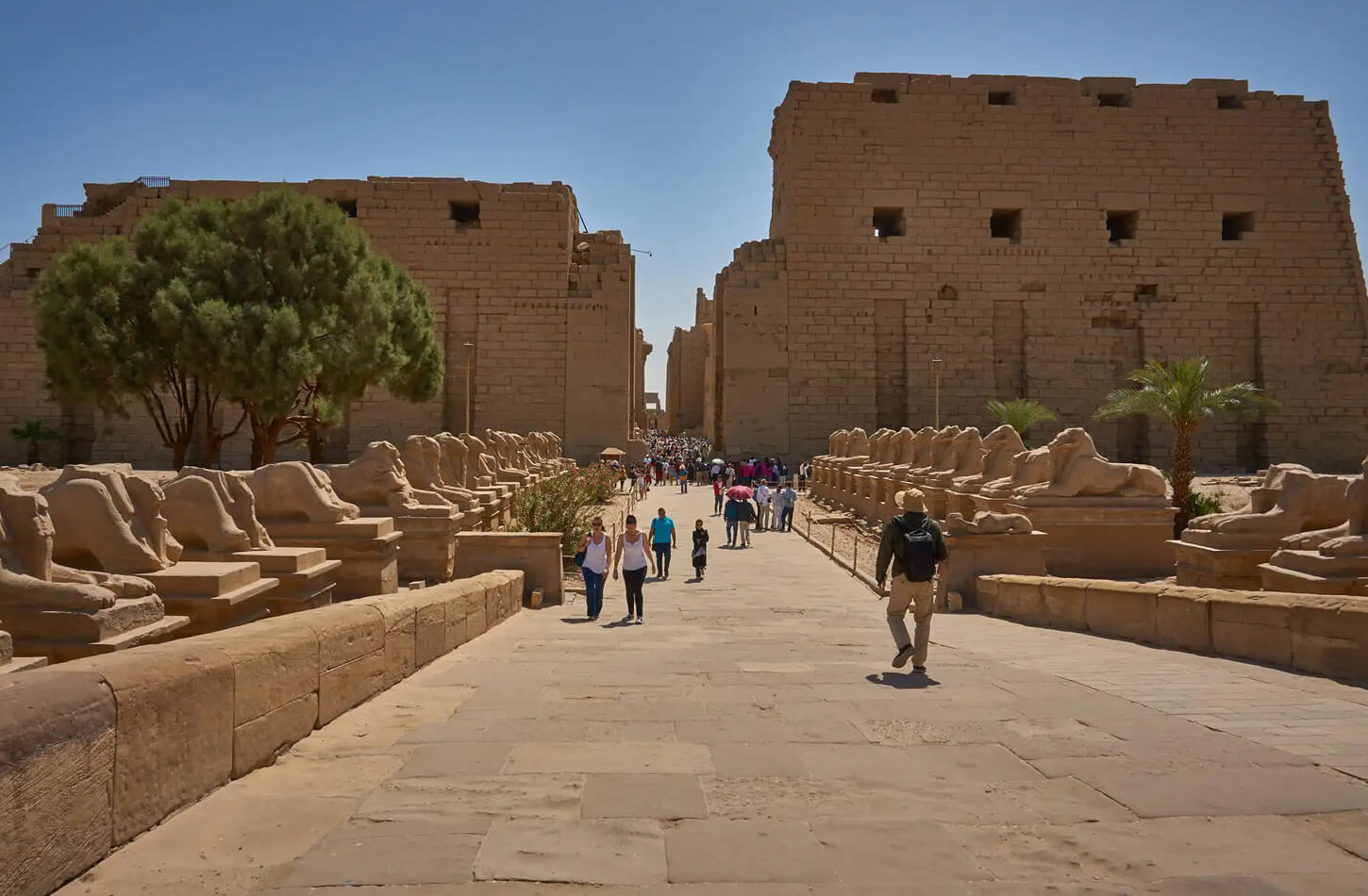
Exploring the East Bank starts at Luxor Temple, where Luxor temple facts come alive. At the entrance, a single obelisk of Queen Hatshepsut stands tall. It’s flanked by Ramses II’s statues.
The Visiting Luxor temples journey takes you through the Great Court. Here, double rows of columns frame Ramses II’s festivals in vivid reliefs. The Colonnade of Amenhotep III shows 14 papyrus-shaped columns, telling ancient ritual tales.
Step into the Sun Court, once the heart of Opet Festival processions. Marvel at the Hypostyle Hall’s grandeur. Beyond the temple, the Avenue of Sphinxes stretches 2.7km toward Karnak Temple—a path used in sacred rituals.
Wander its limestone guardians to feel the Opet Festival’s ancient energy. Don’t miss the Mosque of Abu Haggag, built atop the temple’s ruins in the 12th century. Its minaret contrasts with Pharaonic walls, blending eras in one space.
Did you know Luxor Temple’s site dates back 4,000 years? The mosque’s history ties to Sheikh Abu El Haggag, whose 13th-century arrival marked a religious shift. Local lore claims he appeared in two places at once, a Luxor temple facts mystery still whispered today.
Pair your visit with a stroll along the Nile Corniche for sunset views. For the full experience, book a guided tour—many include a meal at a rooftop restaurant with temple vistas. Remember, the East Bank’s magic lies in its layers: from Pharaonic grandeur to Islamic history, every stone tells a story.
Exploring Karnak Temple Complex: What Not to Miss
Karnak Temple is the world’s largest ancient religious site, covering over 250,000 square meters. A Luxor temple tour is not complete without seeing its grandeur. Start at the Great Hypostyle Hall, where 134 sandstone columns tower overhead.
122 columns stand at 10 meters, while 12 colossal columns reach 21 meters. Their papyrus-like shape and intricate carvings create an awe-inspiring entrance.
Next, walk the 2.7-km Avenue of Sphinxes, linking Karnak to Luxor Temple. At the Sacred Lake, note the red granite scarab statue, a symbol of rebirth. Don’t miss the Open-Air Museum, home to the White Chapel of Senusret I and Hatshepsut’s Red Chapel.
These structures offer a glimpse into ancient religious rituals. Plan at least 2-3 hours for your Visiting Luxor temples itinerary here. Arrive early to beat crowds and heat.
Entry costs 600 EGP for adults, including access to the Open-Air Museum. The Temple of Khonsu’s preserved ceiling colors and Thutmose III’s Festival Hall, featuring 60 rulers, highlight Karnak’s historical depth.
Pair your visit with a morning exploration to fully absorb Karnak’s scale. The Egyptian-Hittite Peace Treaty inscribed here adds a unique historical layer. Remember to wear comfortable shoes—this 2,000-year-old site demands active exploration.
Every column, courtyard, and chapel tells a story waiting to be discovered.
The West Bank Temple Experience
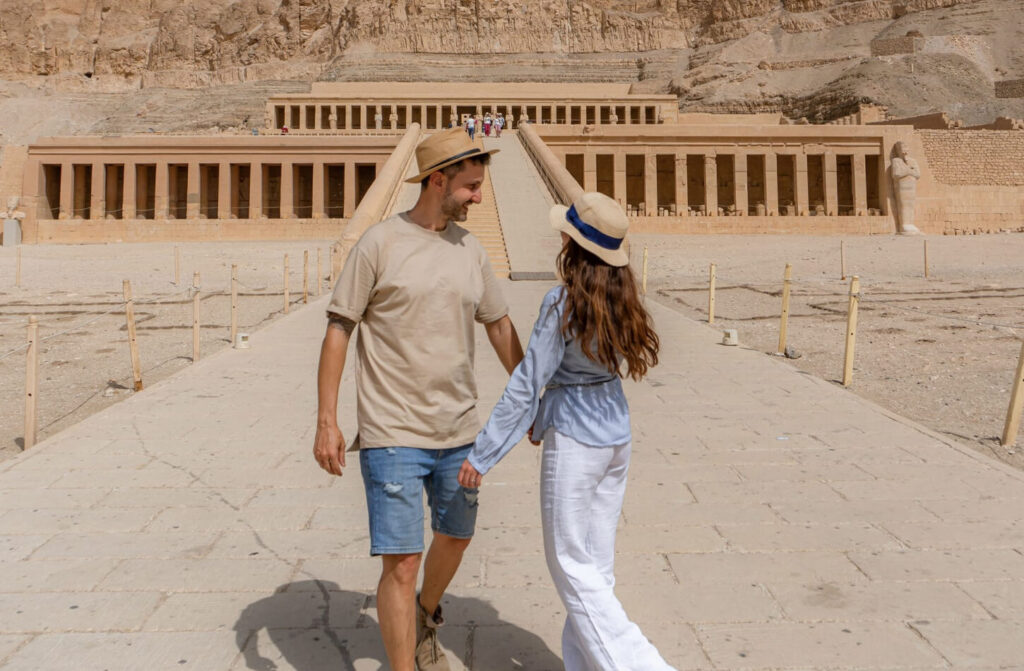
On the West Bank of Luxor, your Luxor temple tour takes you through ancient burial grounds and royal memorials. This area, known as the necropolis of Thebes, includes the Valley of the Kings and Hatshepsut’s mortuary temple. The towering Colossi of Memnon also stands here.
Start early to avoid the heat—arrive by 7 AM for the best views. See tombs like Tutankhamun’s (an extra 700 EGP) and Seti I’s lavish KV17 tomb (2,000 EGP).
Hatshepsut’s temple is a marvel with its terraced design carved into cliffs. The Valley of the Queens is home to Nefertari’s tomb (2,000 EGP extra). Nearby, Medinet Habu’s walls show Ramses III’s military campaigns.
The Ramesseum’s ruins hint at a once-majestic mortuary temple. Students get 50% off most tickets, so remember to check ID requirements.
Plan wisely: the Luxor travel guide suggests getting the Luxor Pass ($130 for 5 days). It covers most sites except premium tombs. Taxis cost ~400 EGP for short trips. Try to avoid the midday sun, as temperatures can reach 40°C (104°F) in summer.
Focus on iconic spots like the Valley of the Kings’ vibrant wall paintings or Hatshepsut’s grand staircase first. With over 60 tombs in the Valley of the Kings, choose highlights like KV62 (Tutankhamun). Or, get the Premium Pass to explore more.
End your day at sunset by the Colossi of Memnon, two 60-foot statues. This ensures your West Bank visit is both informative and comfortable.
Fascinating Luxor Temple Architecture and Design
The Luxor Temple’s architecture is a mix of engineering and storytelling. It has towering pylons, 72 columns shaped like papyrus, and obelisks. One obelisk remains in Luxor, while its twin is in Paris.
Every stone in the temple has a story. The columns symbolize stability and life, inspired by Egypt’s nature. They are decorated with lotus and papyrus designs.
As you walk, you’ll see Ramses II’s massive statues. The Hypostyle Hall has 32 columns, each 21 meters tall. Ancient builders aligned these stones without modern tools.
The Birth Room is a highlight, with vibrant reliefs that show ancient pigments lasted for millennia. Alexander the Great’s cartouche in the sanctuary shows his claim to power.
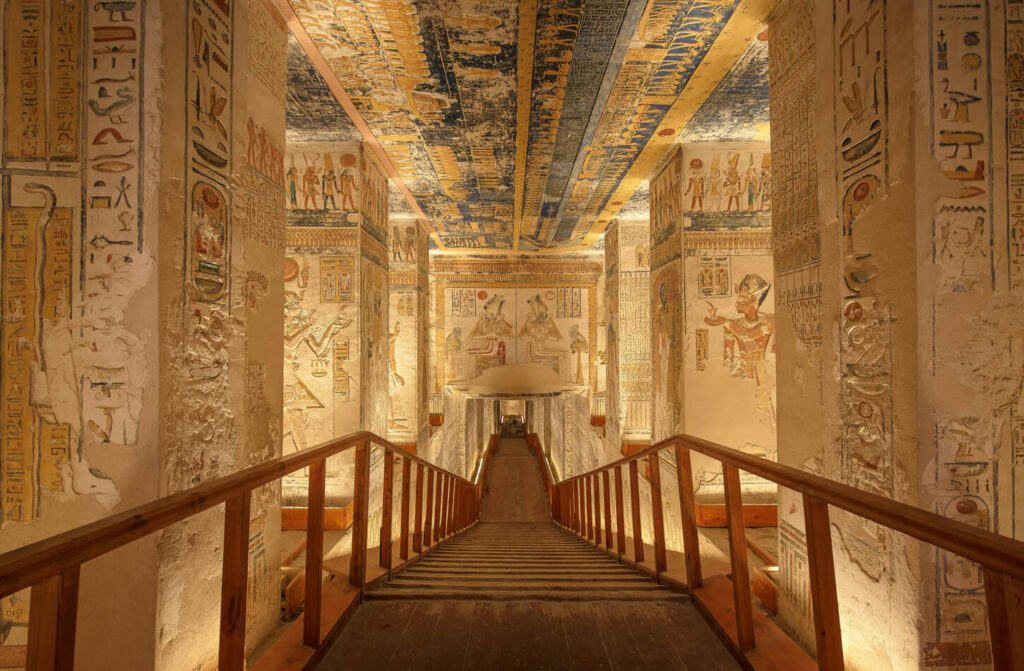
Roman chapels inside the temple reveal its rich history. It was also a Christian church and Islamic mosque. Today, it’s a UNESCO World Heritage Site.
Its design combines religion, politics, and art. From the Avenue of Sphinxes to its ancient carvings, the temple’s story is one of innovation and belief. Each detail offers a glimpse into ancient times.
What to Wear and Bring When Visiting Egyptian Temples
Dressing right is key when visiting Luxor temples. Egypt’s climate calls for practical choices. Choose lightweight cotton or linen fabrics like maxi dresses, capri pants, or long-sleeved shirts.
Cultural norms value modesty, so cover your shoulders and knees. Steer clear of tank tops or shorts, even in the summer. Long sleeves and pants protect your skin from the sun.
Luxor’s temperatures can hit 122°F, making sun protection crucial. Wear wide-brimmed hats, apply SPF 50+ sunscreen, and carry UV-protective sunglasses. Many get “Golfer’s Rash” from too much sun, so long sleeves and pants are a must.
Footwear is important too. Choose thick-soled sandals or sturdy walking shoes for temple paths. Bring a daypack for water, snacks, and a reusable bottle. A scarf or shawl is handy for cooler evenings and quick coverage.
Carry small Egyptian pounds for guides or souvenirs. Cash is still widely used. A well-packed wardrobe makes exploring Luxor’s ancient sites comfortable. This guide helps you balance comfort and respect. Enjoy Karnak’s courtyards and Luxor Temple’s halls with the right gear.
Common Mistakes to Avoid When Visiting Luxor’s Ancient Sites
Planning a Luxor temple tour needs careful choices for the best experience. Many visitors try to see too much in one day, missing the history. Focus on 2-3 main spots like Karnak or the Valley of the Kings when Visiting Luxor temples.
Don’t overestimate your energy. The heat in Luxor can surprise you. Save the sunny afternoons for cool cafes or the Luxor Museum. Then, go back for the best photos during the golden hour.
While saving money by skipping a guide might seem good, their stories make the ruins come alive. Look for licensed guides at ticket offices. Your hotel can give good recommendations.
Don’t forget about tipping. Set aside $10-20 daily for guides, drivers, and boatmen. Small gestures of thanks are expected.
Don’t rush between sites. The West Bank’s attractions are far apart. Rent a private driver for the day (around $25) or use trusted taxis. Walking in the summer’s heat can be dangerous. Always carry water and a hat.
Lastly, respect local customs. Dress modestly at religious sites and don’t take photos of people without asking. Remember, 60% of tourists face vendor problems. A polite “no” works better than a harsh refusal. With these tips, your Luxor temple tour will be stress-free and rewarding.
Conclusion: Making the Most of Your Luxor Temple Adventure
Every stone in Luxor’s temples tells a story of a civilization that shaped history. Your Luxor temple tour will be unforgettable if you mix research with spontaneity. Start with a sunrise visit to the Great Colonnade, built around 1400 BCE.
Then, wander the Avenue of Sphinxes toward Karnak’s towering columns. A 2-day Luxor travel guide might pair East Bank highlights with West Bank tombs. A 3-day plan could add Nile cruises or hot air balloon views. Let locals share myths of the Opet Festival, where statues of Amun, Mut, and Khonsu once paraded between these sites.
Photograph Karnak’s hypostyle hall at dawn for dramatic shadows. Jot down reflections on how these temples influenced later cultures like ancient Greece. Pack light, book guided tours for context, and respect quiet moments to feel the spiritual energy.
With over 60 tombs nearby and daily flights from Cairo, Luxor’s blend of grandeur and accessibility makes it a gateway to 3,400 years of human achievement.
Leave room for wonder—standing where pharaohs once stood, you’re not just a tourist but a witness to history. Let Luxor’s magic linger long after your visit, carrying its legacy of artistry and resilience back home.
Discover more of our related articles: